Download Source Water Protection Fact Sheet as PDF
Mississippi Mills Source Water Protection Statement
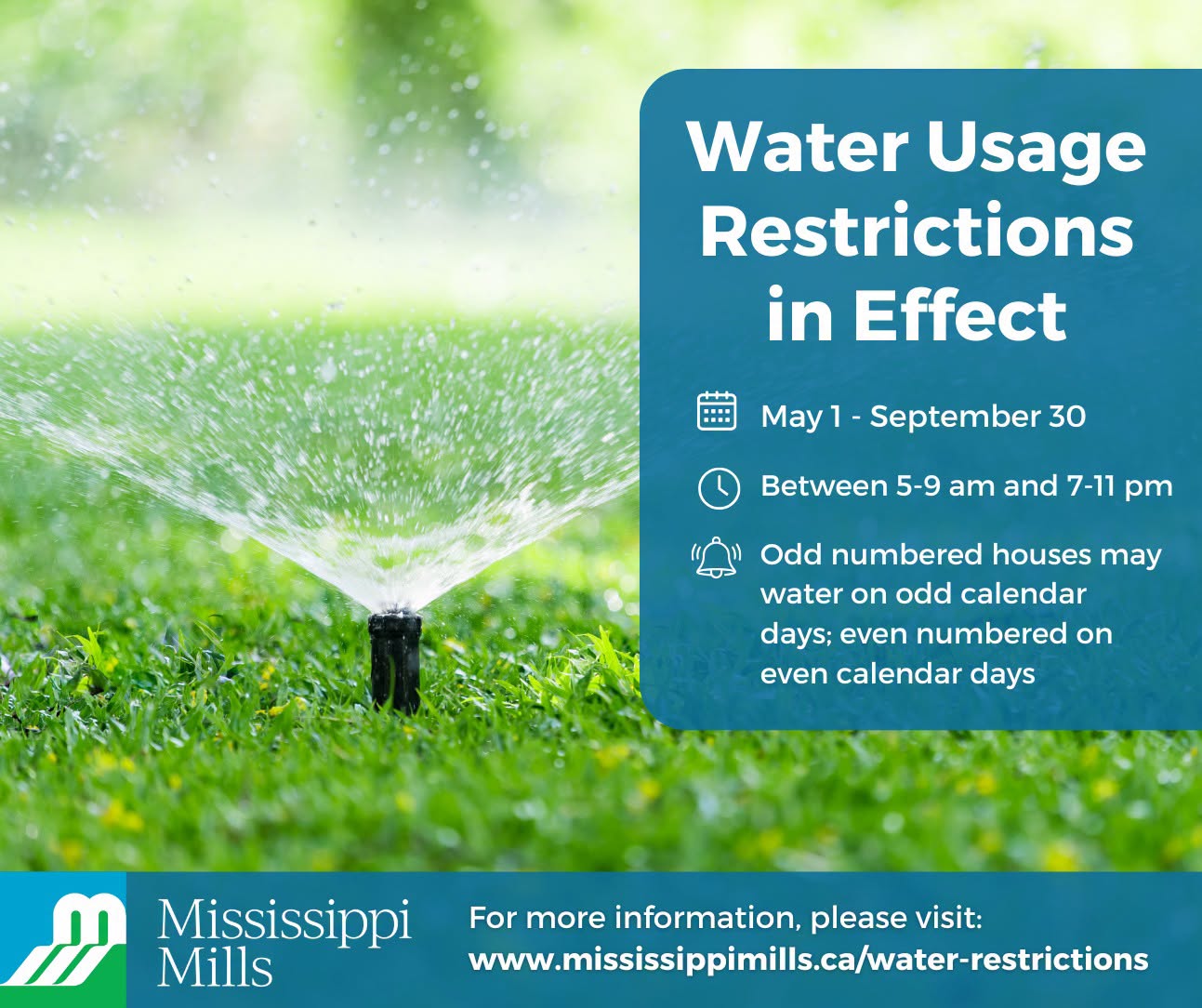
- The Watering Restrictions By-law 04-14 is designed to regulate and control the usage of water. Between May 1 and September 30, odd number houses may water on odd calendar days and even numbered houses on even days. Watering may occur between the hours of 5 a.m. to 9 a.m. and 7 p.m. to 11 p.m.
Water quality and quantity are closely linked; as the amount of water decreases the quality will also be reduced because there is less water to dilute contaminants. Communities can protect drinking water by reducing water consumption.
Less than 3% of the water that is treated for municipal use is actually consumed as drinking water. So where are we using the remaining 97%?
- 75% of indoor home water use occurs in our bathrooms.
- Standard toilets use 40% more water per flush than needed to do the job.
- A 5 minute shower with a standard showerhead uses100 litres of water but a low-flow showerhead uses 35 litres of water.
- A traditional washing machine uses 130 to 250 litres of water to clean one large load.
- Lawn and garden watering increases demand for water by 50%. Watering thoroughly once a week in early morning or evening is more effective than watering daily.
- One lawn sprinkler spraying 19 litres per minute uses 50% more water than 10 toilet flushes, two five-minute showers, two dishwasher loads, and a full load of laundry combined.
- If every household in America had a faucet that dripped once each second, 928 million gallons of water would leak away.
Drought Information
Fresh water is a natural resource critical to the economic and environmental well being of all residents of the Municipality of Mississippi Mills. In the past, periods of dry weather and low water levels were relatively uncommon, happening every decade or so. But, with changing weather patterns, low water levels occur more often, especially with the increasing demand for water.
Low water affects:
- Municipal sources.
- Private wells.
- Lakes, rivers, ponds and all the residents on those waters.
- Agriculture—irrigation, watering livestock.
- Fire fighting.
- Business and industrial uses.
- Recreation (boating, fishing, swimming).
- Personal use — drinking, washing, laundry, and so on.
How to Conserve Water
By being proactive...
- In your home:
- Install a low-flush toilet or install a toilet dam in your toilet tank to reduce water use.
- Keep showers to five minutes or less.
- Consider buying a water efficient showerhead.
- Rinse clothes in cold water; they come out as clean as those rinsed in warm water.
- Wash clothes and dished only when you have a full load.
- Defrost frozen foods in the refrigerator or the microwave, not under running water.
- For cold water to drink, keep a jug in the fridge instead of running the tap.
- With your vehicle:
- Do not wash your car when a municipal water shortage warning is in effect.
- Use Commercial car washes that recycle their water.
- Ensure the hole is properly turned off after use to avoid unnecessary leakage.
- Only wash your car in compliance with the Municipal Water Restriction By Law.
- Only wash your car when it is necessary to do so.
- Use a trigger hose to avoid unnecessary waste.
- Do not wash your car near a storm sewer for drainage.
- In your yard:
- Avoid watering on windy days.
- Water your lawn and plants in the morning or evening—evaporation occurs at a slower rate than in the hot sun.
- Cut grass less frequently.
- Cut grass longer to reduce evaporation.
- Compost your food leftovers and leaves—add compost to lawns and gardens.
- Leave grass clippings on the lawn; they help retain moisture.
- Collect and use rainwater for your lawn and gardens.
- Fix any leaking hose and dripping nozzle.
- Plant more trees around your house to reduce energy needs.
For Further Information
Conservation Ontario
1-905-895-0716
Lanark County
1-888-9-LANARK (52-6275)
Mississippi Valley Conservation Authority (MVCA)
613-253-0006 ext. 233
Municipality of Mississippi Mills
613-256-2064
Ministry of Environment and Climate Change
613-938-2117