
New Carbon Monoxide Alarm Requirements in Effect January 1, 2026
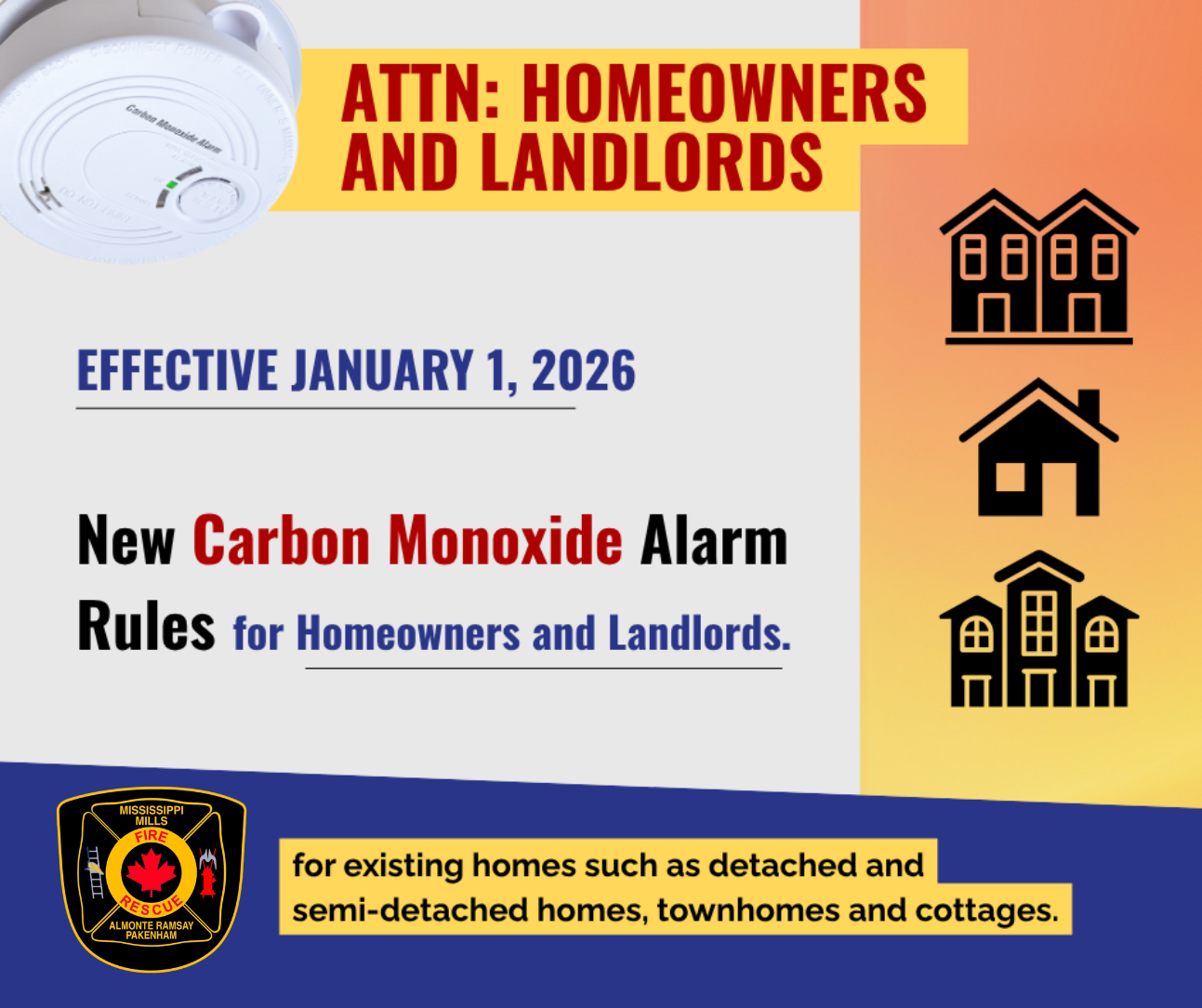
Beginning January 1, 2026, all homeowners, landlords, and residential building managers in Ontario will be required to meet updated Carbon Monoxide (CO) alarm installation requirements aimed at strengthening public safety.
Carbon monoxide is known as the silent killer—it is colourless, odourless, tasteless, and deadly in high concentrations. CO is produced when fuels such as wood, gas, oil, or propane do not burn completely. Without proper ventilation, this gas can accumulate indoors, making a working carbon monoxide alarm essential for protecting your home and family.
Who needs a carbon monoxide alarm?
In Ontario, carbon monoxide alarms are legally required in any home that has:
- A fuel-burning appliance (like a gas stove, water heater, or fireplace)
- A wood-burning fireplace
- An attached garage
- An outdoor furnace
This applies to detached houses, townhouses, apartments and condos.
Where must CO alarms be installed?
In houses and townhomes where CO alarms are required:
- CO alarms are required adjacent to each sleeping area and as of January 1, 2026, on every level of the home. For example, if bedrooms are on the same floor but far apart (for example, on opposite sides of a living room) you need two CO alarms on that floor: one in the hallway outside each group of bedrooms.
If a building has an underground parking garage, you must install CO alarms:
- Next to each sleeping area in any individual unit in the apartment or care unit that shares a wall, floor, or ceiling with the garage
- On every level of those same units that doesn’t have a sleeping area
- Next to each sleeping room that isn’t part of a dwelling unit (for example, a staff sleep room)
If a building is heated by a forced-air fuel-burning appliance that’s not inside a home or care occupancy, you must install CO alarms:
- In the service room or area where the appliance is located (if it’s in the building)
- In any public hallway heated by the appliance
- At least one alarm in each section if the hallway is divided
- Alarms spaced no more than 25 metres apart in undivided hallways
- Next to each sleeping area in any unit heated by the appliance
- On every level of those units that doesn’t have a sleeping area
Testing and Maintaining Your CO Alarms
To ensure CO alarms remain effective:
- Test alarms monthly using the “Test” button.
- Replace batteries yearly, unless using a long-life sealed model.
- Replace the alarm every 7–10 years, or as recommended by the manufacturer.
- Look for alarms certified to safety standards (CSA-6.19 or UL 2034).
- Renters should test alarms monthly and report any concerns to their landlord, who remains responsible for installing and maintaining CO alarms in rental units.
Winter Carbon Monoxide Safety Tips
CO risks increase in colder months. The Mississippi Mills Fire Department recommends:
- Scheduling annual inspections of all fuel-burning appliances, chimneys and vents.
- Keeping outdoor vents and exhausts clear of snow, ice and debris.
- Never idling a vehicle inside a garage, even with the door open.
- Using generators and fuel-powered tools outside only, far from doors, windows and air intakes.
- Never using barbecues, gas stoves, ovens or outdoor heating equipment indoors.
Stay Informed
For more information on fire safety, prevention and carbon monoxide requirements, contact the Mississippi Mills Fire Department or visit www.mississippimills.ca.
Contact Us
MUNICIPAL OFFICE
3131 Old Perth Rd
Box 400
Almonte ON, K0A 1A0
Email: Town@mississippimills.ca
Phone: 613-256-2064
HOURS OF OPERATION
Monday to Friday, 8:30 a.m. to 4:30 p.m. except on Statutory Holidays
Sign up to our newsfeed
Stay up to date on the municipality's activities, events, programs and operations by subscribing to our daily news digest